At 7:15 on a rainy Tuesday morning, the first employee arrives at the office. There is no one waiting to greet him. He has no one to sign the courier who is waiting. A delivery driver is waiting outside with two packages. A contractor is ringing the doorbell. This may not seem like a crisis, but this is the exact kind of friction that builds up to cause trouble during the course of a working week.
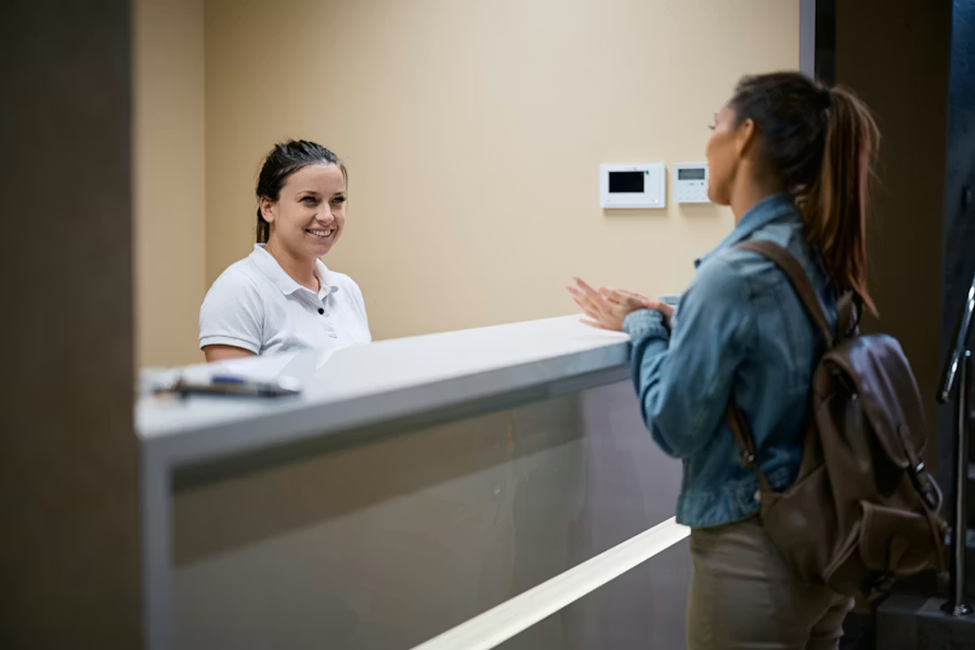
This quiet pressure is just one of the reasons so many offices are reconsidering the role of the reception desk. For years, reception desks were considered the natural front door of any business. Today, in many buildings, that role is being divided among booking software, intercom systems, digital check-in displays, smart locks and a well-designed access control solution. The purpose is not to remove people for the sake of removing them. Rather, it is to eliminate delays, repetitions and the small failures that occur when access relies too heavily upon one desk and one person.
A Traditional Reception Desk Can’t Be Every Place at Once
Reception functions well, unless you operate your building outside of regular office hours. The cleaning crew comes before anyone else. Seniors arrive after everyone else. Suppliers show up between meetings. Hybrid employees drop by on days that are not easily predictable.
You cannot have one desk manage all of those situations effectively. If there is no one at the desk, then visitors have to wait. If the receptionist is already on the telephone, then a line begins to form. In most smaller offices, the reception desk duties are tacked onto another employee’s job, causing distractions and lost information.
Automation assists in filling in the gaps. A visitor management system will immediately contact the right individual. A door-entry panel can direct incoming calls to mobile phones. Employees can gain access to the building without depending upon keys, printed sign-in forms or a partially opened side door “that everyone knows about.”
Access Should Be Easy Without Being Too Loose
Most offices make a common mistake; they treat ease of access and safety as opposing concepts. Poorly run entryways typically result in both difficulty accessing and potential risks. An open door that is habitually propped open because employees are tired of buzzing each other into the building is not efficient. It is evidence that the building’s entry system does not match the actual operation of the office.
An effective access control solution provides varying degrees of access for various individuals without creating a cumbersome procedure. Employees can quickly move throughout the building. Contract workers can be restricted to specific times or locations. Access for deliveries can be accomplished without providing uncontrolled access. That is important in offices where daily activities include data protection, equipment security, and client confidentiality.
The Job of the Front Desk Worker Is Changing, Not Vanishing
Even though automation will replace some aspects of the front desk worker’s job, there is still value in a person greeting visitors, solving problems, and identifying events that a computer screen cannot identify. The difference is in the types of jobs that fill a front desk worker’s time. Fewer manual sign-ins.
When an office uses automation correctly, employees are able to assist with the human aspect of a front desk worker more effectively. That might involve coordinating guests. Assisting newly hired employees to become acclimated to their new environment. Providing proactive maintenance for facilities rather than wasting time dealing with entryway issues.
Buildings Must Mirror the Way Employees Work
The movement away from a standard reception desk seems less like a current fad and more like an appropriate adaptation. Offices still require a main entrance. They simply don’t require it to perform in the manner it did previously. Usually, they only need it to work. Whether someone is stationed behind the desk or not.